

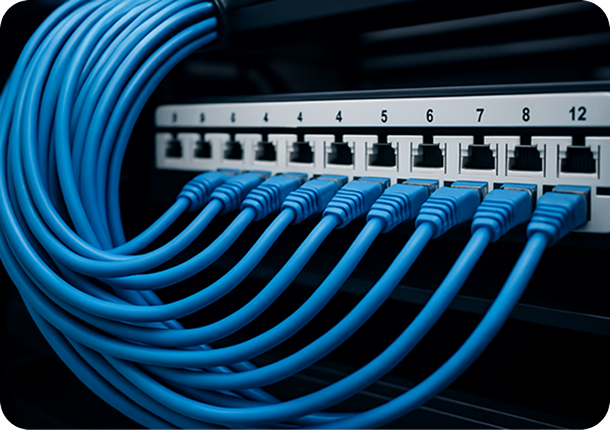
Structured Cabling Installation
A network is only as good as the cabling under it. That sounds obvious. It still gets ignored on a lot of projects.
Alliance Telecommunications designs and installs structured cabling systems across New Jersey and New York City. Our work covers data, voice, and multimedia networks. New building or older facility, the goal does not change. Build a foundation that holds up as your business grows.
Partner with Alliance for Your Cabling Needs
Our team of BICSI-certified professionals follows ANSI/TIA/EIA standards to make sure every installation delivers maximum uptime, performance, and organization. With decades of experience and a reputation for quality workmanship, Alliance is your trusted partner for structured cabling solutions.
Why Structured Cabling Matters
Bad cabling shows up in small ways first. A dropped call. A slow transfer.A port that stops working. Then it shows up in big ways.

Minimizes Downtime

Future-Proof Design

Simplifies Moves, Adds, and Changes

Enhances Aesthetics and Safety

Team of BICSI-certified Professionals
What Structured Cabling Includes
Structured cabling is not one cable. It is six subsystems working together. Each one has a job, and skipping any of them causes problems down the road

Entrance Facilities
Where the provider’s cabling ends and your building’s cabling begins.
Equipment Room
The home base. Switches, servers, routers, and power supplies live here.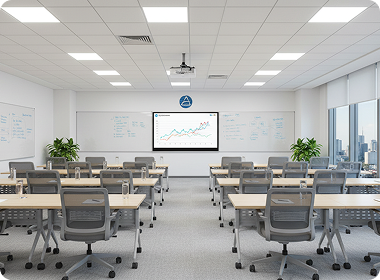
Backbone Cabling
The vertical spine that connects equipment rooms, telecom closets, and entrance.Telecommunications Room
The termination and cross-connect point for backbone and horizontal cables.Horizontal Cabling
The runs that connect telecom rooms to wall outlets in the work area.Work Area
Where the end user sits. Phones, computers, and other devices plug into the outlets here.Cabling Options: Cat6, Cat6A, and Fiber Backbone
Not every run needs the same cable. Matching the cable to the job saves money and avoids bottlenecks.
- Cat6: A solid choice for most office runs. Handles gigabit speeds well and covers standard workstation needs at a lower cost.
- Cat6A: Built for higher bandwidth and longer distances. A good fit for healthcare, education, and any space running heavy data or planning for future upgrades.
- Fiber Backbone: The right call for connecting floors, buildings, or equipment rooms. Handles distance and speed that copper cannot match, and it stays immune to electrical interference.
Most projects use a mix. Copper to the desk, fiber between the closets. We help you sort out which runs need which cable before anything gets installed.
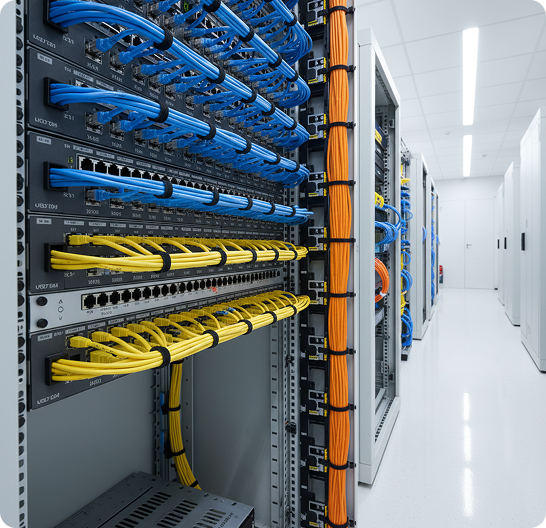
Closet Clean-Up and Remediation
Not every project starts with an empty room. Plenty start with a closet that has been added to for fifteen years and never cleaned up.
We handle that too. Our team traces existing cabling, removes abandoned runs, re-terminates bad connections, and rebuilds patch panels to a standard layout. The result is a closet you can actually work in, with labels that make sense and documentation that matches what is physically there.
Remediation costs far less than a full replacement. When the existing cable is sound, we clean it up and keep it. When it is not, we tell you straight.
Testing and Certification Deliverables
Every installation gets tested before we call it done. No exceptions
You receive test results for every run, including pass or fail status against the standard your project follows. We deliver labeled patch panels, outlet labels, and as-built documentation that shows exactly what was installed and where. If your project calls for manufacturer warranty coverage, we complete the certification steps needed to register it.
That paperwork matters later. It speeds up troubleshooting, backs warranty claims, and gives your IT team a real map of the network.
Industries We Serve
Alliance works with organizations across many sectors. Schools, hospitals, corporate offices, data centers, government sites, and multi-tenant buildings all have cabling we installed and still help maintain.
Each one brings its own demands. A hospital cannot tolerate downtime. A school needs durable runs that survive daily use. A data center needs density and cooling planned into every rack. A corporate office needs consistency across every floor.
Frequently Asked Questions
What is structured cable installation?
Structured cable installation is the process of designing and installing an organized cabling system that supports a building’s data, voice, video, and other network-connected technologies. Rather than running individual cables without a common structure, the system uses standardized pathways, termination points, equipment rooms, telecommunications rooms, and work-area connections. A professional installation also includes labeling, testing, certification, and documentation. The result is a network foundation that is easier to maintain, troubleshoot, expand, and adapt as technology and business requirements change.
What are the 6 components of structured cabling?
The six components are entrance facilities, equipment rooms, backbone cabling, telecommunications rooms, horizontal cabling, and work areas. Together, they create an organized path from the service entering the building to the devices employees use every day. Each component serves a specific purpose, from housing network equipment to connecting individual outlets and linking floors or buildings. Alliance explains these elements in greater detail in its guide to the six components required for commercial structured cabling.
How much does structured cabling cost?
Structured cabling costs depend on the size and complexity of the installation. Major factors include the number of cable runs, cable type, required distances, building layout, pathway conditions, labor requirements, testing, and whether existing infrastructure can be reused. Cat6, Cat6A, and fiber also have different installation requirements. A straightforward office installation will have a different scope than a multi-floor building, healthcare facility, school, or data center. Alliance evaluates the site and network requirements before developing a cabling plan and project scope.