

Outdoor Audio in Commercial Spaces Requires More Than Weatherproof Speakers
Outdoor environments in commercial settings often serve more than one purpose. Restaurants extend seating to patios, corporate campuses host events, and hospitality venues rely on atmosphere to shape guest experience. Sound plays a direct role in how these spaces function. When audio is inconsistent, too quiet in one area and overwhelming in another, it affects both operations and customer satisfaction.
A well-planned outdoor audio system supports communication, enhances ambiance, and aligns with how the space is used day to day. The focus is not just on equipment, but on how the system is designed, installed, and integrated into the environment using professional audio-visual solutions.
Understanding System Requirements Before Installation
Every outdoor space presents different challenges. Open-air environments lack the natural acoustics of enclosed rooms, which means sound behaves differently. Background noise from traffic, weather, or nearby activity also impacts performance.
Before selecting equipment, it is important to evaluate how the space will be used. A restaurant patio requires even, low-level coverage for conversation, while an event venue may need higher output and flexible zoning. These decisions shape the type of system that will perform effectively.
Infrastructure also plays a role. Outdoor systems depend on stable physical infrastructure, including data network infrastructures and well-planned structured cabling systems that support consistent signal distribution and long-term reliability. Without that foundation, even high-quality equipment may underperform.
Why Speaker Placement Is a Design Decision, Not a Guess
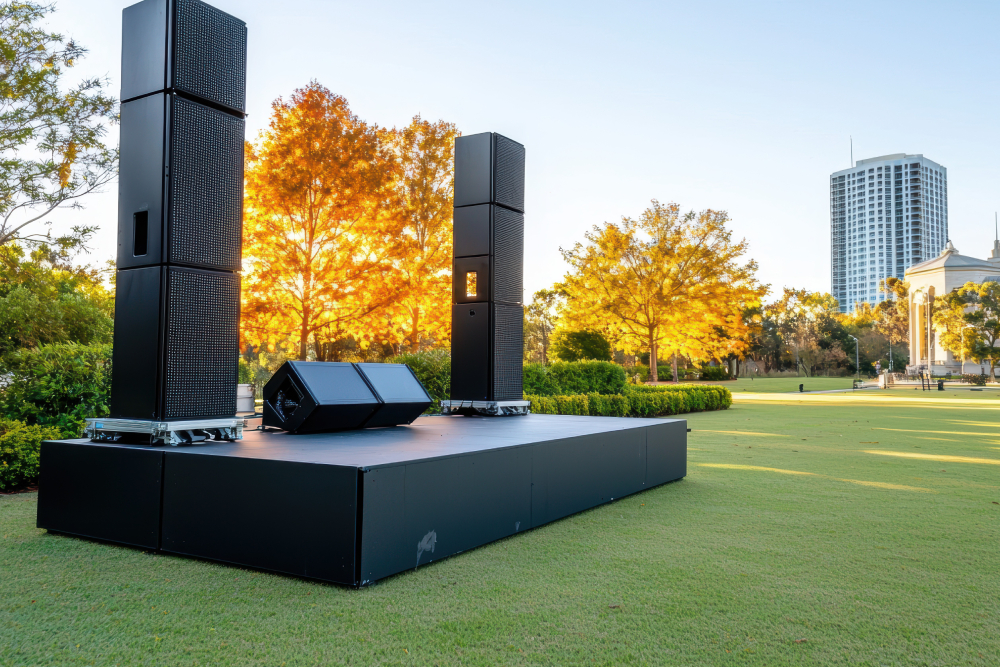
Speaker placement directly affects how sound carries across an outdoor area. In commercial environments, uneven coverage leads to inconsistent experiences for guests and staff. Some areas may feel too loud, while others lack clarity.
A well-designed layout accounts for coverage zones, mounting locations, and environmental factors such as landscaping or building structures. Elevation, spacing, and directional control all contribute to balanced sound distribution.
This is where planning matters. Rather than placing speakers based on convenience, the system should be designed to match the layout of the space and the intended use. This approach avoids distortion, reduces overlap, and creates a more controlled listening environment.
Power, Connectivity, and Long-Term Performance
Outdoor audio systems depend on more than just speakers. Amplification, wiring, and connectivity must all work together to maintain consistent performance. Power requirements vary based on system size, and improper configuration can lead to distortion or system strain.
Structured cabling systems form the backbone of these installations. They support clean signal transmission and allow for future expansion if the space evolves. In larger properties, centralized control systems may also be used to manage multiple zones or adjust volume levels across different areas.
Reliability is a key consideration. Outdoor environments expose equipment to moisture, temperature changes, and physical wear. Professional installation accounts for these factors through proper cable routing, protective enclosures, and secure connections.
Integration With Broader Facility Systems
Outdoor audio rarely operates in isolation. Many commercial environments integrate sound with lighting, video displays, and other building systems. For example, digital signage or LED displays may work alongside audio to support events or promotions.
This level of coordination requires planning across multiple systems. Physical infrastructure supports communication between components, while security solutions may also tie into the same environment, especially in public-facing spaces.
When systems are designed together, the result is a more cohesive and manageable setup. Teams can control audio zones, adjust settings, and respond to changing needs without disruption.
Ongoing Support and System Reliability
Outdoor systems are long-term investments, and their performance depends on consistent upkeep. Routine inspections, system checks, and adjustments help maintain sound quality and prevent issues before they affect operations.
Access to 24/7 support also plays a role in maintaining uptime, especially in environments that rely on audio for daily operations or scheduled events. When issues arise, a responsive support structure helps keep systems running without extended downtime.
A Practical Approach to Outdoor Audio Systems
Outdoor audio systems in commercial settings require more than equipment selection. They involve planning, coordination, and execution that aligns with how the space is used. From audio-visual solutions to structured cabling systems and supporting infrastructure, each component contributes to overall performance.
At Alliance Telecommunications Contractors Inc., we approach outdoor audio as part of a broader system. We design and install solutions that align with real-world business needs, supported by data network infrastructures, integrated security solutions, and reliable 24/7 support. Our focus stays on delivering systems that perform consistently and scale with your environment over time.
If you are planning an outdoor audio system for your commercial space, our team can help you approach it with clarity and precision.
Contact Alliance Telecommunications Contractors Inc. to discuss your project and build a system that supports your operations from day one.