

A Guide To Selecting The Right Screen Size For Digital Signage
Digital displays have become an essential communication tool in offices, retail spaces, healthcare facilities, and public environments. Businesses rely on digital signage to share information, promote services, and guide visitors through their facilities. When planning a display system, one of the most important decisions involves choosing the right digital signage screen sizes for the environment.
The size of a display directly affects how easily viewers can read and understand the information presented. Displays that are too small may be difficult to see from a distance, while oversized screens may overwhelm the space or create visual imbalance.
Selecting the correct screen size requires careful consideration of the room layout, viewing distance, and the type of content being displayed. By understanding how screen sizes interact with your specific environment, you can implement multimedia/audiovisual solutions that deliver your message clearly.
Viewing Distance and Clarity
The most influential factor in determining the correct dimensions for your display is the average distance from which your audience will view the screen. A display intended for a narrow hallway where people walk within a few feet of the wall requires a different approach than a screen mounted behind a reception desk or high on a lobby wall.
For close-range engagement, smaller signage sizes often provide a more intimate and readable experience for detailed text or interactive menus. As the distance between the viewer and the screen increases, the physical size of the display must grow proportionally to maintain legibility and visual command of the space.
Understanding the Standard Signage Size for Commercial Spaces
For professional displays, there is no single standard signage size that fits every application, but certain dimensions have become common benchmarks for specific uses. Small-format displays ranging from 10 to 32 inches are frequently utilized for room scheduling or shelf-edge retail promotions.
Medium-sized screens, typically between 43 and 65 inches, serve as the workhorses for corporate hallways and waiting rooms. For large-scale impact in auditoriums or expansive retail fronts, displays often exceed 75 inches or transition into modular LED video walls. Selecting from these categories requires a balance between the functional needs of the content and the physical constraints of the architecture.
Evaluating Content Type and Information Density
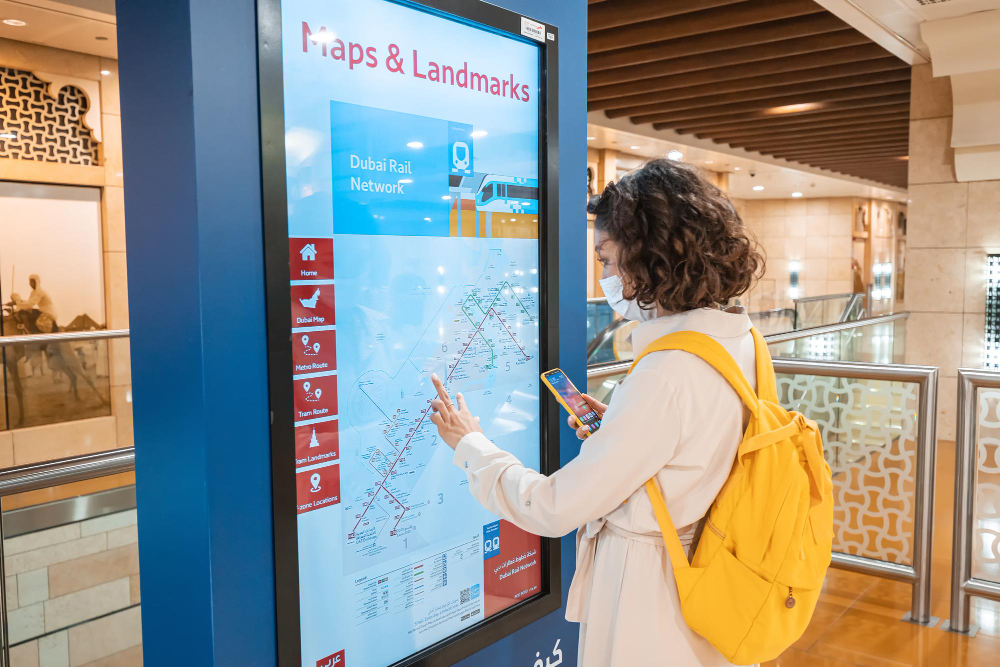
The nature of the information you plan to share should heavily influence your hardware choices. If your digital signage is intended to display complex data, such as wayfinding maps or detailed flight schedules, a larger screen with higher resolution is necessary to ensure that fine lines and small text remain crisp. Conversely, if the goal is to show bold lifestyle imagery or simple brand logos, you may have more flexibility with size.
Alliance Telecommunications Contractors Inc approaches these design challenges by analyzing how the content will be consumed. We ascertain that the engineering behind the display supports the intended communication goals. Our team integrates these displays into your broader low-voltage infrastructure, providing a reliable foundation that keeps your information flowing smoothly.
Placement Height and Environmental Constraints
Where you mount the screen is just as important as the size of the screen itself. A large display mounted too low can be obstructed by foot traffic, while a small screen mounted too high becomes impossible to read.
You must also consider the ambient light in the environment. High-brightness displays are often required for areas with significant natural light, and the physical footprint of these high-performance units can vary.
By evaluating the facility requirements early in the process, we help ensure that the mounting hardware and structural support are prepared to handle the specific dimensions of the selected hardware. This helps prevent unexpected installation challenges.
The Psychological Impact of Screen Scale
The size of your digital signage sends a subtle message about the importance of the information being shared. Large, immersive displays suggest authority and high-value branding, making them ideal for flagship locations or main entryways. Smaller, strategically placed screens feel more personalized and helpful, which is perfect for directional assistance or localized internal communications.
Choosing the right scale is a consultative process that aligns your technology goals with the desired emotional response from your audience. When the scale is correct, the technology feels like a natural extension of the building rather than an afterthought.
Designing for Maximum Visual Engagement
Selecting the perfect display is an exercise in precision and environmental awareness. By focusing on the relationship between the viewer, the content, and the physical space, you can create a digital signage network that truly resonates.
The goal is to create a seamless experience where the technology disappears, and only the message remains. This level of integration requires a deep understanding of both the hardware capabilities and the human elements of visual perception.
Finding the right balance for your facility requires a partner with a focus on engineering excellence and customer support. Our team provides the educational guidance needed to handle the complexities of modern audiovisual technology.
Explore our professional digital signage and integrated solutions to see how our tailored approach can help you select the perfect hardware. Schedule a free consultation to find out how we can help you meet your unique communication needs for long-term success.