

Understanding Enterprise Network Infrastructure in Commercial Facilities
In many organizations, the network is expected to operate reliably without drawing attention. When it does, business operations move smoothly. When it doesn’t, the consequences are immediate: conference rooms lose connectivity, security systems experience interruptions, and facility expansions stall due to infrastructure limitations.
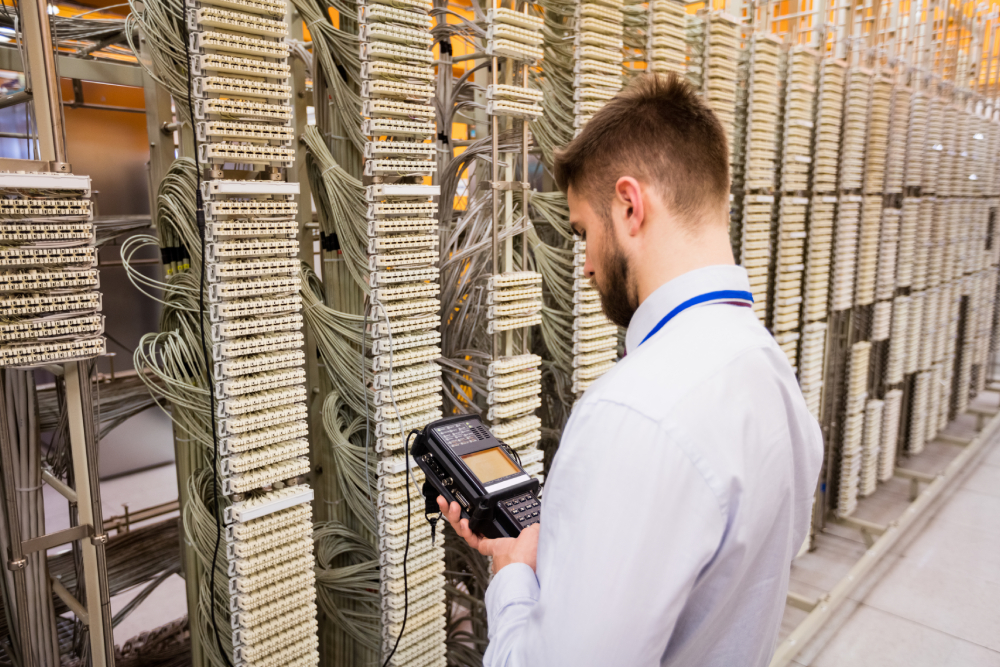
For commercial and institutional environments, data network infrastructure is not an abstract concept or a software platform. It is a physical system made up of cabling, pathways, equipment rooms, and connected devices that support daily operations across the facility.
Understanding how this infrastructure functions helps decision-makers plan investments that reduce risk and support long-term use.
The Role of Network Infrastructure in the Built Environment
Enterprise network infrastructure serves as the backbone for many building systems. Audiovisual technology, access control, surveillance, and operational data systems all depend on reliable connectivity.
Unlike residential or purely IT-driven networks, commercial environments require infrastructure that can support multiple systems simultaneously across large spaces. This often includes backbone cabling between floors, dedicated pathways for low-voltage systems, and equipment rooms designed to support long-term serviceability.
When network infrastructure is planned alongside the building itself, it becomes an enabling asset rather than a recurring constraint.
Why Physical Design Matters
The performance of a network is directly tied to how it is physically installed. Cable type, pathway routing, termination quality, and equipment placement all influence signal reliability and longevity.
Facilities with crowded ceilings, limited conduit capacity, or undocumented cabling often experience higher failure rates and longer downtime during changes or repairs. These issues are rarely caused by software limitations-they stem from infrastructure that was not designed with future use in mind.
Thoughtful physical design improves reliability while simplifying maintenance and expansion.
Supporting Multiple Systems on a Shared Network
Modern facilities rely on a growing number of connected systems. Conference room technology, digital signage, security platforms, and operational monitoring tools often share the same underlying network infrastructure.
Planning for this convergence requires coordination. Bandwidth demands, power requirements, and system priorities must be understood early to prevent conflicts later. A well-designed infrastructure allows these systems to coexist without degrading performance or reliability.
This approach also reduces redundancy by allowing shared pathways and equipment to support multiple functions efficiently.
Scalability Without Disruption
Facilities evolve over time. Departments expand, spaces are reconfigured, and new technology is introduced. Network infrastructure that is rigid or undersized can slow these changes and increase project costs.
Scalable infrastructure planning focuses on capacity and access. This may include reserving pathway space, installing backbone cabling that exceeds current needs, or organizing equipment rooms to accommodate future additions.
By planning for growth at the infrastructure level, organizations reduce the likelihood of disruptive retrofits later.
Reliability and Risk Reduction
Unplanned downtime can affect productivity, safety, and communication. Physical infrastructure plays a major role in minimizing these risks.
Proper cable management reduces accidental damage. Clear labeling and documentation shorten repair times. Dedicated equipment spaces protect critical components from environmental stress.
These considerations may not be visible to end users, but they directly influence system uptime and operational continuity.
Integration With Audiovisual and Security Systems
Enterprise network infrastructure must support more than data traffic. High-resolution displays, video conferencing systems, access control platforms, and surveillance cameras all place specific demands on the network.
Planning infrastructure with these systems in mind ensures predictable performance and avoids last-minute compromises. It also allows AV and security systems to be installed and supported without overloading the network or requiring costly rework.
The Importance of Professional Execution
Network infrastructure intersects with construction, electrical systems, and other low-voltage technologies. Successful deployment requires coordination across trades and adherence to industry standards.
Professional installation ensures that infrastructure is installed correctly, tested thoroughly, and documented clearly. This reduces long-term maintenance issues and supports consistent performance throughout the facility’s lifecycle.
For organizations that depend on their network every day, professional execution is a critical investment.
Our Approach to Enterprise Network Infrastructure
At Alliance Telecommunications, we design, install, and support network infrastructure as part of the built environment. Our focus is on physical systems that support audiovisual technology, security platforms, and connected building operations.
We begin by understanding how a facility is used today and how it is expected to change. From there, we design infrastructure that supports reliability, scalability, and long-term serviceability. Our work emphasizes coordination, clear documentation, and consistent workmanship so that systems perform as expected long after installation.
If you are evaluating network infrastructure for a new facility or planning upgrades within an existing environment, contact Alliance Telecommunications to discuss your requirements and planning considerations.