

How A Video Wall Works: Understanding The Basics
In high-impact visual communication, few technologies command attention like a massive, seamless display. While many see a single, giant image, the underlying engineering is a sophisticated orchestration of multiple hardware and software components working in perfect harmony.
How does a video wall work? The answer lies in the integration of specialized panels and powerful processing units. Unlike a standard television, these systems are designed for continuous operation and immense scalability. They typically operate as part of integrated multimedia/audiovisual solutions that organizations can use to transform a blank lobby or command center into a hub of real-time data and branding.
What Is a Video Wall?
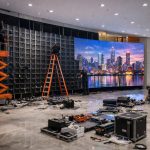
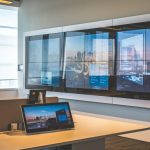
A video wall is a display system made up of multiple screens arranged together to create one large, continuous display. Each screen functions as part of a larger image.
When properly aligned, the panels appear to operate as a single visual surface. This allows organizations to present large images, detailed graphics, or multiple information sources across a unified display.
Video walls may use LED panels, LCDs, or other specialized screen technologies, depending on the application. These displays appear in corporate lobbies, conference centers, broadcast studios, and control rooms where large-scale visual communication is important.
The system works by coordinating multiple components that manage content, distribute signals, and maintain synchronized images across every display panel. The ability to display multiple information sources simultaneously makes video walls valuable for monitoring operations, presenting data, or delivering high-impact presentations.
The Video Wall Processor
The brain of the entire operation is the video wall processor or controller. This device takes the various input signals and determines exactly where each pixel should land on the tiled array.
The processor is responsible for splitting a single high-resolution image across multiple screens or managing multiple windows of content simultaneously. This allows a user to display one giant cinematic video across all screens or break the wall into a grid of different data feeds. Advanced processors also manage the aspect ratio and resolution, ensuring that the imagery does not appear stretched or distorted as it moves across the physical gaps between the monitors.
Understanding Direct View LED Technology
How does an LED wall work differently from traditional LCD panels? A direct-view LED wall does not use a liquid crystal layer or a backlight.
Instead, each pixel is composed of a cluster of tiny red, green, and blue light-emitting diodes. These diodes are mounted directly onto a circuit board and emit light toward the viewer.
Because there are no bezels or frames around the individual modules, the resulting image is completely seamless. This technology is particularly effective for large-scale architectural features because the modules can be curved or shaped to fit the unique contours of a building’s interior.
Calibration and Visual Consistency
For a video wall to be effective, every panel must look identical in terms of color, brightness, and contrast. Even slight variations between monitors can break the illusion of a single screen and distract the viewer.
Professional installations involve a rigorous calibration process where light sensors are used to measure the output of each display. Technicians then adjust the settings so that the entire wall maintains a uniform appearance over its operational life.
This attention to detail is what separates a professional-grade installation from a standard DIY setup. Alliance Telecommunications Contractors Inc brings a level of technical precision backed by our AVIXA and BICSI Corporate memberships.
We make sure that every installation meets the most stringent industry standards. By overseeing the entire low-voltage scope, we provide a stable power and data foundation that prevents the drift in visual quality often seen in less integrated systems.
Signal Distribution and Connectivity
The path that the video signal takes from the source to the screen is just as important as the display itself. Modern systems often use AV-over-IP technology to send high-bandwidth video signals over standard network cabling.
This allows for incredible flexibility, as sources can be located anywhere in the facility and routed to the wall with minimal latency. High-quality connectors and shielded cabling are necessary to prevent electromagnetic interference, which can cause flickering or signal loss. A robust physical foundation ensures that the high-resolution content remains stable, providing the reliability that commercial and institutional environments demand.
Bringing Large-Scale Visual Communication to Life
Video wall technology continues to transform how organizations share information and present visual content. These display systems create large digital surfaces capable of delivering powerful visual communication, supporting collaboration and information sharing across many industries.
They require thoughtful planning, professional installation, and reliable infrastructure. Video walls must integrate with communication platforms and facility technology to deliver consistent performance.
Our team works with organizations to design and implement integrated display environments that are both beautiful and functional. Talk to us to learn how our professional audiovisual and integrated solutions can help you design a custom technology stack that aligns with your operational goals.