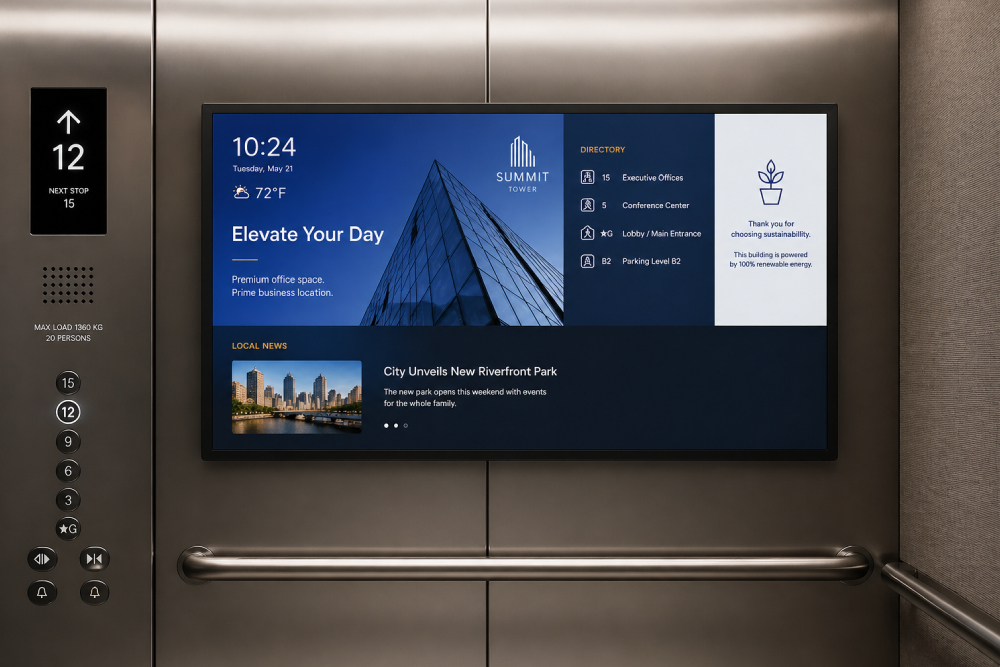


How Elevator Digital Signage Enhances Branding And Information Flow
In a modern high-rise or commercial facility, the few moments spent traveling between floors represent a unique opportunity for undistracted communication. Unlike a sprawling lobby or a busy street where attention is fragmented, the enclosed environment of a lift naturally directs the occupant’s gaze toward available visual stimuli.
Implementing digital signage in elevators allows property managers and business owners to capitalize on this captive audience, turning a mundane transition into a powerful touchpoint for brand reinforcement.
Using this strategy, facilities can maintain a high-performance environment where information reaches tenants and visitors with absolute precision. These multimedia/audiovisual solutions provide the versatility needed to adapt messaging instantly, ensuring the content remains relevant to the time of day and the specific audience.
Defining the Captive Audience Experience
What is digital signage in the context of vertical transportation? It is a specialized network of high-brightness, slim-profile displays engineered to operate within the unique electrical and physical constraints of a moving cab.
Unlike standard monitors, signage for elevators must be robust enough to handle constant vibration and limited ventilation while maintaining high-fidelity visual output. This technology acts as a real-time information hub that can broadcast news, weather, stock updates, and internal building announcements. When the technology is integrated with precision, it disappears into the aesthetic of the cab, leaving only the message to resonate with the passenger.
Strengthening Brand Identity through Vertical Communication
For corporate headquarters and luxury residential properties, every square foot of the facility reflects the brand’s identity. Elevators are often the first and last experience a visitor has with a building, making them a critical location for setting a professional tone.
Custom-branded content, such as high-definition video backgrounds or stylized company logos, reinforces the organization’s prestige. Because the content can be updated from a central location, the branding remains cohesive across the entire facility, regardless of how many cabs are in operation.
Optimizing Information Flow for Tenants and Visitors
In a busy commercial environment, the ability to disseminate information quickly is a logistical necessity. Traditional paper notices taped to the walls of a lift are not only unsightly but also inefficient, as they require manual labor to replace and often go unnoticed.
Digital displays allow for the immediate broadcast of building-wide announcements, such as scheduled maintenance, fire drill reminders, or amenity updates. This streamlined flow of information reduces the administrative burden on facility staff and ensures that residents and employees are never caught off guard. By providing clear, readable text and engaging visuals, the building management fosters a more transparent and trustworthy relationship with its occupants.
Promoting Safety and Emergency Notifications
While branding and news updates are valuable, the most critical function of a digital display in a lift is its role in a facility’s safety protocol. In the event of an emergency, the screens can be programmed to display bold, clear instructions for evacuation or sheltering in place.
Because these screens are often the first thing a passenger looks at upon entering the cab, they provide a reliable way to communicate during a crisis. Educational content regarding safety procedures or the location of AEDs and fire extinguishers can also be rotated into the daily content loop. This proactive approach to safety prioritizes the well-being of every occupant.
Generating Revenue through Targeted Advertising
For many property owners, digital signage in elevators offers an opportunity to generate additional revenue through third-party advertising or local partnerships. Because the demographic of a specific building is often well-defined, such as legal professionals, tech workers, or luxury residents, advertisers are willing to pay a premium for such targeted exposure.
These ads can be scheduled to run during peak traffic hours, such as the morning commute or lunch break, maximizing the return on investment. When managed with a consultative eye toward the building’s culture, these advertisements can feel helpful rather than intrusive, highlighting local dining options or professional services that add value to the tenant’s day.
Enhancing the User Experience and Reducing Perceived Wait Times
One of the most significant psychological benefits of providing visual content in a lift is the reduction of perceived travel time. When passengers are engaged with interesting news snippets, trivia, or tranquil nature footage, the time spent moving between floors feels shorter.
This leads to higher tenant satisfaction and a more positive perception of the building’s efficiency. The technology provides a welcome distraction from the social awkwardness often felt in crowded cabs, creating a more relaxed and customer-focused atmosphere. By choosing the right screen size and resolution for the cab’s dimensions, facility managers ensure that the content is legible and impactful for every passenger.
Supporting Internal Communication
Elevator displays also support internal communication within organizations that occupy multi-floor buildings. Employees traveling between departments can see important announcements while riding the elevator.
These displays may highlight company news, employee recognition, or operational reminders. Because employees use elevators regularly, messages receive repeated visibility throughout the workday.
This helps reinforce important information without interrupting employees with frequent meetings or emails. Digital displays, therefore, serve both informational and cultural communication purposes within the workplace.
The Technical Challenges of Lift Integration
Installing electronics in a moving cab requires a deep understanding of the underlying teledata and low-voltage infrastructure. Alliance Telecommunications Contractors Inc has what it takes to make your infrastructure both resilient and future-ready. We install the right structured cabling and traveling cables to support the high bandwidth required for constant media playback.
Since 1983, we have focused on providing precision-driven integration that stands up to the rigors of institutional use. By managing the entire low-voltage scope, we ensure that the displays are synchronized perfectly with the building’s network and integrated security systems. This professional oversight prevents the intermittent signal drops that can occur when systems are installed without a comprehensive understanding of elevator mechanics.
Transform Everyday Spaces into Communication Opportunities
Elevators can offer a valuable opportunity to connect with occupants and visitors. Digital displays turn these everyday environments into communication platforms that share timely information and reinforce branding. With thoughtful design and proper system integration, elevator signage can improve information flow throughout an entire building.
Our team works with organizations to design and install integrated communication environments that connect displays, infrastructure, and content management systems. Connect with us to learn how our audiovisual integration services can help your organization implement digital display systems that strengthen communication and branding across your facility.