

Video Wall Vs. Digital Signage: Six Key Differences Explained
When modernizing a commercial or institutional facility, the terminology surrounding display technology can sometimes feel overlapping or confusing. Decision-makers often find themselves weighing the pros and cons of a video wall vs. digital signage to determine which solution best serves their communication goals. While both technologies utilize high-definition screens to deliver content, their engineering, physical scale, and primary functions differ significantly.
Depending on the architectural requirements of your facility, integrating tailored multimedia/audiovisual solutions ensures that the technology complements the aesthetic while serving its functional purpose. Understanding how these technologies differ helps businesses choose the right display strategy for their space.
Scale and Physical Impact in the Environment
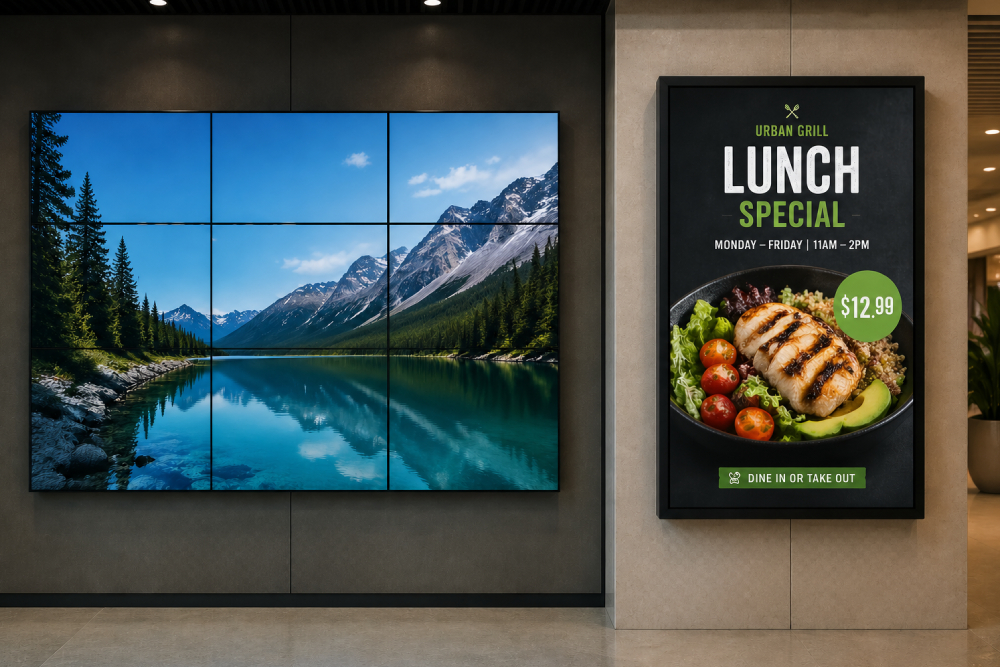
The most immediate difference between these two systems is their physical presence. Standard digital signage typically involves individual, standalone displays placed strategically throughout a building to share information. These screens are often the size of a large television and are used for wayfinding, menu boards, or localized announcements.
A video wall, however, is a massive, unified canvas created by tiling multiple displays or LED modules together. The sheer scale of a video wall is designed for high-impact visual command, often serving as the centerpiece of a lobby, auditorium, or command center. While a single screen provides a helpful touchpoint, a wall creates an immersive experience that can be seen from a great distance across a large open space.
Technological Architecture and Seamless Integration
Behind the glass, the hardware driving these two solutions operates with different levels of complexity. Traditional digital signage often relies on a simple media player tucked behind a single screen, making it a relatively straightforward installation. A digital signage video wall requires a much more robust backend, including specialized video processors and controllers that synchronize the many panels into one cohesive image.
Managing this level of complexity requires a unified engineering strategy. Alliance Telecommunications Contractors Inc streamlines these projects by overseeing the entire process under a single point of management.
We eliminate the communication gaps that often occur between separate contractors. Our consultative approach focuses on precision-driven design, ensuring that the sophisticated software and hardware components are calibrated to perform as a single, high-fidelity system from day one.
Primary Purpose and Audience Engagement
The functional needs of the organization usually dictate which path to take. Digital signage is primarily used for the efficient flow of information.
The benefits of digital signage include the ability to share real-time updates, news, and safety alerts in high-traffic areas where people are moving quickly. It is a highly effective tool for targeted messaging in elevators, hallways, or breakrooms.
Conversely, a video wall is often used for storytelling, high-stakes presentations, or monitoring complex data sets. In a fast-paced operations center, a wall provides the expansive real estate necessary to view multiple live feeds at once. In a corporate entrance, it serves as a powerful branding tool that signals innovation and authority to every visitor who walks through the door.
Content Resolution and Aspect Ratio Flexibility
Content creation for a single digital sign is relatively standard, as most displays follow the common 16:9 widescreen aspect ratio found in consumer electronics. This allows businesses to easily repurpose videos or graphics without extensive reformatting.
Video walls offer a much broader range of creative freedom but come with more technical requirements. Because a wall is modular, it can be built in virtually any shape or size, including extremely wide panoramic ribbons or tall vertical pillars.
This flexibility means that the content must be custom-rendered to match the specific resolution and aspect ratio of the unique array. Achieving high-performance outcomes on such a large scale requires a keen eye on pixel pitch and signal processing to ensure that imagery remains crisp and vibrant even when viewed up close.
Infrastructure and Structural Considerations
Installing a massive multi-panel array involves a different set of facility requirements than hanging a few standalone monitors. The structural integrity of the wall must be verified to handle the substantial weight of the display and its mounting hardware. Furthermore, the power and cooling requirements for a large-scale video system are much higher.
Our approach to these projects involves a deep analysis of the environment long before the hardware arrives. We ensure that the teledata infrastructure and electrical distribution are engineered to meet the highest quality standards.
Cost Considerations and Budget Alignment
When evaluating the budget, it is important to distinguish between the cost of the hardware and the value of the outcome. Digital signage is often a more accessible entry point for businesses looking to modernize their communication. It allows for a phased rollout across multiple locations with a lower initial investment per unit.
A video wall represents a larger capital expenditure but offers a unique return on investment through its ability to transform a space and captivate an audience in a way that individual screens cannot. A consultative partner helps with these financial decisions by aligning the technology goals with the actual functional needs of the facility. This ensures that the final system is neither underpowered nor unnecessarily over-engineered.
Building a Unified Communication Strategy
In many modern facilities, the best approach is not choosing one over the other, but integrating both into a cohesive technology stack. Individual digital signs can handle the localized, informational tasks, while a centrally located video wall serves as the primary visual anchor for branding and main announcements.
By linking both systems to a unified content management platform, facility managers can push updates to every screen in the building simultaneously. This integrated strategy ensures a consistent user experience and a professional atmosphere that inspires trust in clients and employees alike.
Transform Your Facility with Expert Integration
Transforming your facility with professional display technology requires both engineering precision and creative vision. Whether you are looking for the widespread reach of a signage network or the immersive power of a video wall, the goal is to create an environment that facilitates better communication and collaboration. By prioritizing reliability and ease of use, you can ensure that your technology serves as a silent, high-performance partner in your daily operations.
The transition to a sophisticated digital environment requires a partnership with experts who understand the intersection of technology and facility management. By prioritizing scalability and professional oversight, you ensure that your investment continues to provide value as your communication needs evolve.
Consult with our team of specialists to understand our full range of professional audiovisual and integrated solutions. Learn how our precision-driven approach can help you design a custom technology stack that aligns with your operational goals.