

Video Wall Vs. Projector: Which Is Best For Your Space?
Selecting the right large-format display for a commercial or institutional environment is a decision that impacts communication, collaboration, and the overall aesthetic of the facility. For many years, projection systems were the standard choice for boardrooms and auditoriums, but recent advancements in light-emitting diode technology have shifted the conversation toward modular displays.
Businesses often compare video wall vs. projector technology to determine which solution works best for their environment. Both technologies can deliver strong visual performance, but each offers unique advantages depending on the space and intended use.
By choosing the right multimedia/audiovisual solutions, an organization can ensure its message is delivered with maximum clarity and impact, regardless of the architectural constraints.
Understanding Projector Display Systems
Projectors are a familiar technology in meeting rooms, classrooms, and presentation environments. A projector works by casting an image onto a projection screen or flat surface. This approach allows organizations to display large images without installing oversized physical displays.
Projector systems typically include a projector unit, a projection screen, mounting hardware, and signal connections from presentation devices. When properly installed, these systems can deliver large visual displays suitable for presentations and video content.
One advantage of projectors is the ability to create large display surfaces with relatively minimal hardware. Organizations can project images that fill entire walls, making projectors a practical option for large meeting rooms or auditoriums.
However, projection systems rely heavily on environmental conditions. Ambient light can affect image clarity, and projectors may require regular maintenance to maintain brightness and focus.
What Is a Video Wall?
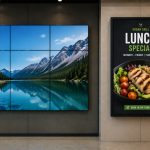
A video wall is a display system made from multiple digital screens arranged together to form one large visual surface. These displays operate as a single screen capable of presenting high-resolution content across multiple panels.
Video walls appear in control rooms, corporate lobbies, conference centers, and large presentation environments. They allow organizations to present multiple content sources simultaneously, such as dashboards, live feeds, or presentations.
Unlike projection systems, video walls generate their own light. This allows them to maintain bright visuals even in well-lit spaces. Businesses often choose video walls when consistent image clarity and high visual impact are priorities.
When comparing LED video wall vs. projector solutions, brightness and environmental performance often become key deciding factors.
Comparing Image Brightness and Visibility
Brightness represents one of the most noticeable differences between video walls and projection systems. Projectors rely on reflected light, which means their image quality can decline in bright environments.
In these scenarios, the LED video wall vs. projector comparison often leans toward the wall. Projectors struggle to maintain color saturation and black levels when competing with sunlight, often resulting in a faded, hazy image that causes eye strain for the audience.
Video walls are engineered to overcome these environmental hurdles, providing vibrant imagery even in glass-walled lobbies or sunlit atriums. This level of luminosity ensures that presentations and digital signage remain legible and impactful throughout the day, supporting a more professional and educational atmosphere.
Evaluating Display Flexibility
Video walls offer significant flexibility when it comes to screen configuration. Organizations can design displays in various shapes and sizes by combining multiple panels together.
These systems can present multiple content sources simultaneously. For example, a video wall may display several dashboards, presentations, or live video feeds across different sections of the screen.
Projectors typically display a single image on one large surface. While some advanced systems support multi-source presentations, they often require additional hardware to achieve this capability.
Maintenance and Long-Term Performance
Maintenance requirements also differ between these two display technologies. Projectors use lamps or laser light sources that may require periodic replacement over time.
Filters and lenses may also require cleaning to maintain optimal image quality. Organizations that rely heavily on projector systems often schedule regular maintenance to ensure consistent performance.
Video walls generally require less frequent hardware maintenance. Individual panels may operate for long periods without needing replacement, though periodic inspections help maintain system performance. Maintenance teams can replace individual screens if necessary without shutting down the entire display system.
Installation and Space Considerations
Space layout also plays an important role in selecting the right display technology. Projectors require sufficient distance between the projector unit and the screen to produce large images.
This distance may limit installation options in smaller rooms. Ceiling mounting and cable routing must also be considered when planning projector installations.
Video walls require physical wall space to support the display panels and mounting systems. Equipment racks and signal processors may also support the system behind the scenes.
Alliance Telecommunications Contractors Inc supports organizations by designing integrated display environments. Our designs combine infrastructure, control systems, and professional installation to support high-performance communication technology.
Comparing LED Video Wall Vs. LCD Video Wall Options
If you determine that a modular display is the correct path, the next step involves choosing between different panel technologies. The LED video wall vs. LCD video wall decision involves a trade-off between seamlessness and resolution.
LCD walls are composed of high-definition monitors with very thin bezels. While cost-effective, the narrow lines where the monitors meet are still visible to the naked eye. Direct-view LED walls, however, are completely seamless, as the diodes go all the way to the edge of each module. While LED technology traditionally required a larger viewing distance, modern fine-pixel-pitch LED modules now offer the high-resolution clarity needed for close-up viewing in conference rooms and executive suites.
Finding the Best Visual Solution for Your Environment
Display technology plays an important role in modern communication environments. Whether presenting data, hosting meetings, or sharing information with large audiences, organizations rely on clear visual systems to support collaboration and decision-making.
Both projectors and video walls offer valuable capabilities. The right choice depends on the specific requirements of the space, the type of content being displayed, and the environment where the technology will operate.
Design a Display System that Supports Your Communication Goals
Choosing the right display technology requires thoughtful planning and professional system design. Visual communication systems must align with both the physical environment and the organization’s operational needs.
Our team works with businesses to design integrated communication environments that combine displays, infrastructure, and control platforms into reliable presentation systems. Contact us today to find out how our audiovisual integration and support services can help your organization implement display solutions that support collaboration, presentations, and information sharing throughout your facility.