

6 Essential Access Control Technologies You Should Know
Quick Summary
Access control systems rely on a range of technologies that regulate entry, track movement, and support workplace security. This article highlights technologies that businesses should recognize when planning or upgrading their systems.
Access control technology continues to progress as businesses demand stronger control over entry points and facility movement. Recognizing the technologies behind these systems helps organizations make educated decisions about security investments.
Modern office technology often includes integrated access systems that connect entry control with communication and monitoring platforms. This creates a more connected workplace where access management supports daily operations.
Advanced security solutions use multiple technologies working together to regulate entry and monitor activity. Each component contributes to a structured system that supports controlled environments.
Businesses focused on proactive commercial security rely on these technologies to reduce risk before issues arise. Early detection and controlled access help prevent unauthorized activity instead of reacting after the fact.
1. Keycard and Credential-Based Systems
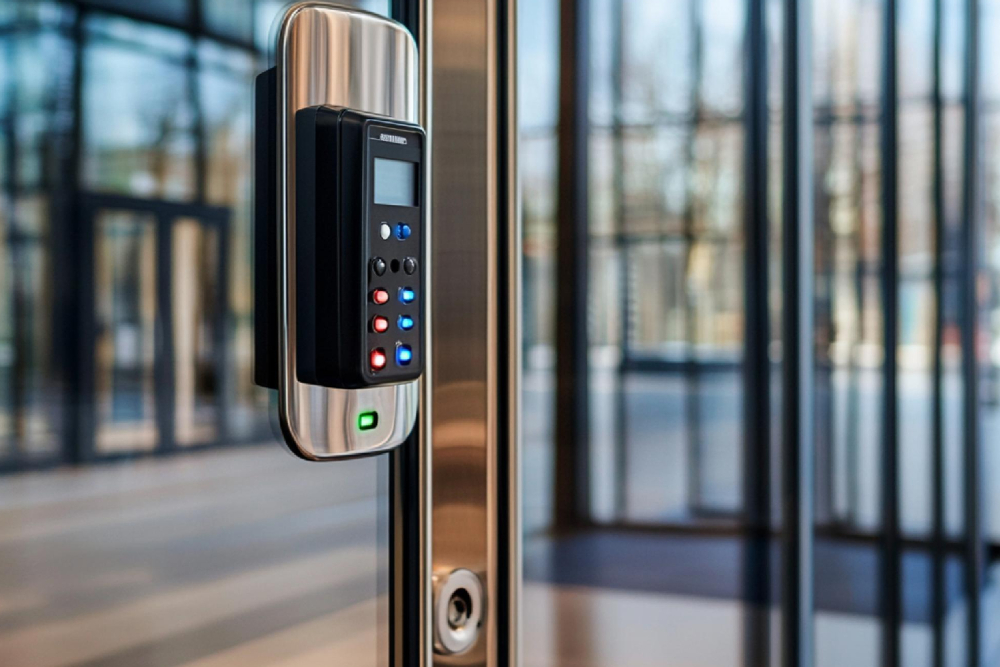
Keycard systems remain widely used due to their simplicity and reliability. Employees use assigned cards to gain entry to approved areas, creating a controlled access environment.
Each credential is linked to a specific user. This allows businesses to track movement and maintain clear records of entry activity.
Lost or compromised cards can be deactivated quickly. This reduces the risk of unauthorized access without requiring physical lock changes.
2. Mobile Access Technology
Mobile access systems allow employees to use smartphones as credentials. This removes the need for physical cards while offering convenience for daily use.
Digital credentials can be issued and updated remotely. Businesses can adjust access permissions without distributing new hardware.
Mobile systems also support contactless entry. This improves efficiency at high-traffic access points while maintaining controlled entry.
3. Biometric Authentication Systems
Biometric systems use unique physical characteristics such as fingerprints or facial recognition to verify identity. This method reduces the risk of credential sharing.
Access is tied directly to the individual. This creates a higher level of accountability within the system.
Biometric technology is often used in areas that require stronger access restrictions. It supports environments where sensitive information or assets are present.
4. Cloud-Based Access Control Platforms
Cloud-based systems allow administrators to manage access remotely through centralized platforms. This provides flexibility for businesses with multiple locations.
Permissions can be updated in real time. Changes apply instantly across all connected entry points.
Cloud platforms also support data storage and reporting. Businesses can review access logs and monitor activity without relying on on-site systems.
5. Integrated Surveillance Connections
Access control systems often connect with surveillance technology. Cameras linked to entry points provide visual confirmation of access events.
This coordinated setup adds context to activity logs. Businesses can verify who entered a space and review footage when needed.
Combined systems improve awareness. Entry events are no longer isolated, allowing for a more complete view of facility activity.
6. Alarm and Alert Coordination
Access control systems can connect with alarm systems to trigger alerts during unauthorized attempts. This immediate response helps prevent escalation.
Alerts can notify security teams of unusual activity. Quick awareness supports faster response times.
Alarm system coordination strengthens overall security. Each technology supports the others, creating a unified approach to protection.
Why These Technologies Matter for Businesses
Access control technologies work together to create structured environments where entry is controlled and monitored. Each component contributes to a system that supports both security and daily operations.
Businesses benefit from selecting technologies that align with their needs. The right combination improves efficiency while maintaining controlled access across all areas.
Professional implementation helps make sure that these technologies function as intended. Proper setup and system alignment reduce the risk of gaps or inconsistencies.
Built for Smarter Security Systems
At Alliance Telecommunications, we design and install access control systems that incorporate the right technologies for each business environment.
We manage cabling, security, and system integration under one scope, allowing our clients to maintain consistent performance without dealing with disconnected systems.
We focus on delivering reliable infrastructure that supports controlled access and long-term stability. Our team works with businesses across multiple industries, creating systems that line up with real operational demands.
If you have any questions about Alliance Telecommunications or want to examine access control options, please reach out to us today.
FAQs
Yes. Many systems combine keycards, mobile access, and biometric methods to create layered control across different areas.
Cloud platforms use secure protocols to protect data while allowing remote management and real-time updates.
Selection depends on facility size, security priorities, and operational needs. Professional guidance helps line up technology with business goals.