

What Is Access Control? A Quick Guide
What is access control and why is it a major consideration for modern organizations? Access control refers to the systems that regulate entry to physical spaces such as buildings, rooms, and secured areas.
Proper access control protects employees, visitors, equipment, and facilities while allowing daily operations to move efficiently. When designed and installed correctly, these systems create a secure, monitored environment without disrupting how people move through the space.
Beyond protection, access control provides operational clarity. Organizations can monitor entry activity, adjust permissions as needs change, and prevent unauthorized access without adding administrative burden. From corporate offices to healthcare facilities, well-planned systems provide controlled entry that can scale with organizational growth.
Core Components of a Physical Access Control System
An effective access control system combines field hardware, control panels, credential readers, electronic locking devices, and management software that operates the system.
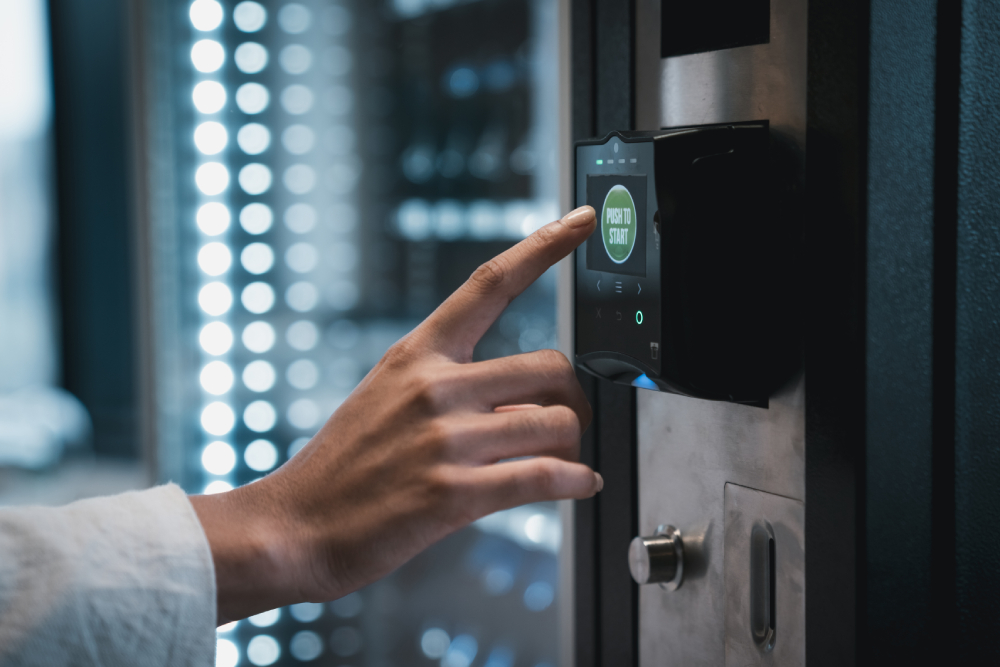
Hardware may include keycards, fobs, credential readers, door position switches, request-to-exit devices, and electronic locks. Control panels manage how these devices function together, while the software records entry activity and allows administrators to manage permissions.
Policies determine who can enter specific areas and when. When these elements are designed together, the result is an organized system that improves safety, reduces manual oversight, and protects the facility.
Early planning during system design is critical to long-term performance and reliability.
Physical Access Control in Practice
Physical access control restricts entry to buildings, rooms, and secured zones using credentials such as keycards and fobs. Authorized personnel can move freely through approved areas, while unauthorized access is prevented automatically.
Well-planned systems allow organizations to adjust access rules as personnel or operational needs change. Adding a new employee, restricting a storage room, or modifying entry hours can be done without reworking the system.
When installed correctly, access control operates quietly in the background while consistently protecting the facility.
Advantages of Professionally Designed Access Systems
Professionally designed systems offer several important benefits:
- Improved protection by reducing unauthorized entry
- Clear activity records showing who entered specific areas and when
- Operational efficiency by eliminating manual key management
- Adaptability as access needs change over time
These systems help organizations maintain a secure environment while preserving productivity and ease of movement throughout the facility.
Use With Broader Physical Security Technologies
Access control systems perform best when coordinated with other physical security technologies such as video surveillance, alarm systems, and intrusion detection.
When these systems are planned together, organizations gain better visibility into facility activity and faster response capability when issues arise. This coordinated approach strengthens overall building security and improves awareness without adding complexity.
Planning, Design, and Installation
Professional planning ensures that access control hardware is placed where it will be most effective. This includes evaluating entry points, traffic flow, secured areas, and how people naturally move through the building.
Proper installation prevents common issues such as poorly positioned readers, unreliable door hardware, or inconsistent system behavior. Careful design also ensures compatibility with existing infrastructure so the system functions reliably from day one.
Ongoing Maintenance and System Reliability
Like any facility system, access control requires periodic inspection and maintenance to continue operating properly. Hardware components experience wear over time, and routine checks help prevent unexpected failures.
Ongoing support allows organizations to adjust permissions, add doors, or expand the system as needed without disruption. With proper care, access control systems remain dependable for many years.
Access Control That Adapts as Facilities Change
As organizations grow or reconfigure their spaces, access control systems can expand with them. Additional doors, readers, and credentials can be added without replacing the original system.
This flexibility allows facilities to maintain consistent protection even as layouts, staffing, or operational needs evolve.
Secure and Manageable Entry for Modern Facilities
Access control helps organizations protect people, property, and spaces while keeping operations running smoothly. When systems are thoughtfully designed and professionally installed, they provide long-term reliability and clear oversight of facility entry activity.
Alliance Telecommunications designs and installs physical access control systems that integrate smoothly with surveillance and other building security technologies to create a coordinated, dependable environment.
Plan Your Access Control Upgrade with Alliance Telecommunications
If your facility is upgrading security, renovating spaces, or replacing outdated key systems, contact us today.
Alliance Telecommunications designs and installs standards-based physical access control systems that protect buildings, regulate entry, and remain manageable as your facility evolves.