

Revolutionizing Business Sales With LED Video Walls Advertising
Quick Summary
LED video wall advertising helps a business sell by putting large, bright, changeable content where buyers make decisions: storefront windows, showrooms, lobbies and trade show booths. Video walls draw attention from a distance, let teams update promotions in minutes and turn a space into a branded experience that printed signs cannot match.
Every business with a physical space competes for a few seconds of attention. A shopper walking past a storefront, a visitor waiting in a lobby or an attendee scanning a crowded exhibit hall decides almost instantly whether to stop. Static posters and printed banners rarely win that moment, and they cost time and money to replace each time an offer changes.
An LED video wall advertising business strategy puts motion, color and scale to work at that decision point. Alliance Telecommunications has designed and installed commercial multimedia/audiovisual solutions since 1983, and we see video walls turn lobbies, showrooms and booths into spaces that sell.
Why LED Video Wall Advertising Works for Business
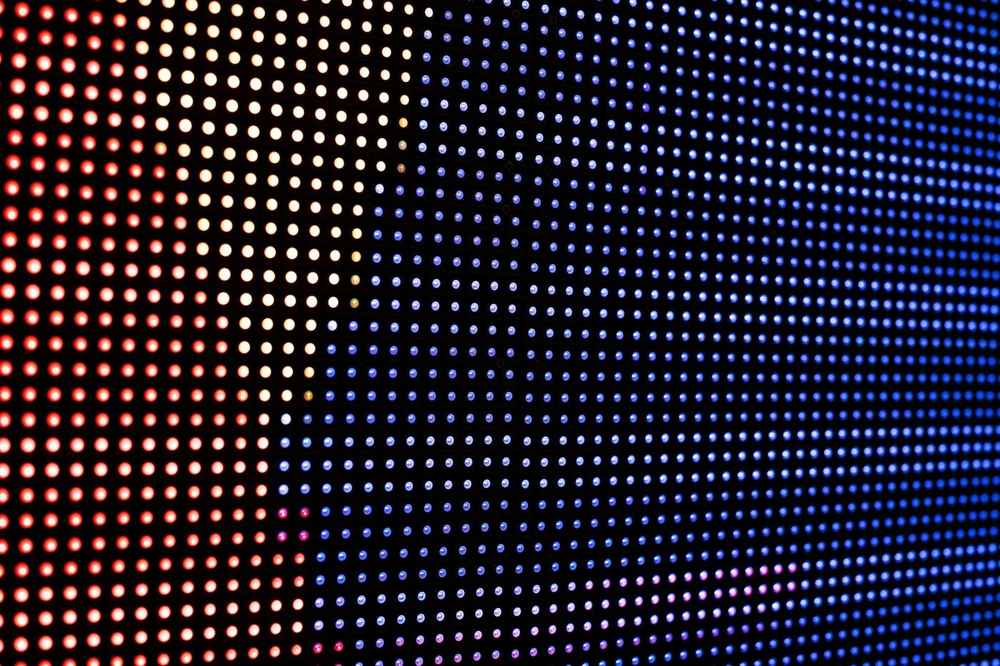
LED video walls are built from modular panels that join into one seamless display. Because each panel produces its own light, the image stays bright and readable in sunny storefronts and well-lit retail floors where projected images wash out.
For our clients, the advantages show up in three areas:
Attention: large-format motion catches the eye from across a room or a street, well before a printed sign is noticed.
Flexibility: one screen can run product launches in the morning, lunch specials at noon and brand stories in the evening.
Brand impact: a wall sized to fit the architecture makes a space feel modern and intentional, which shapes how buyers judge the business behind it.
Video walls also scale in a way single screens cannot. Panels can form wide banners, tall columns or curved surfaces, so the display fits the space rather than forcing the space to fit a television.
Where LED Video Walls Drive Sales
The best placement is wherever buyers pause and compare options.
Storefronts and Window Displays
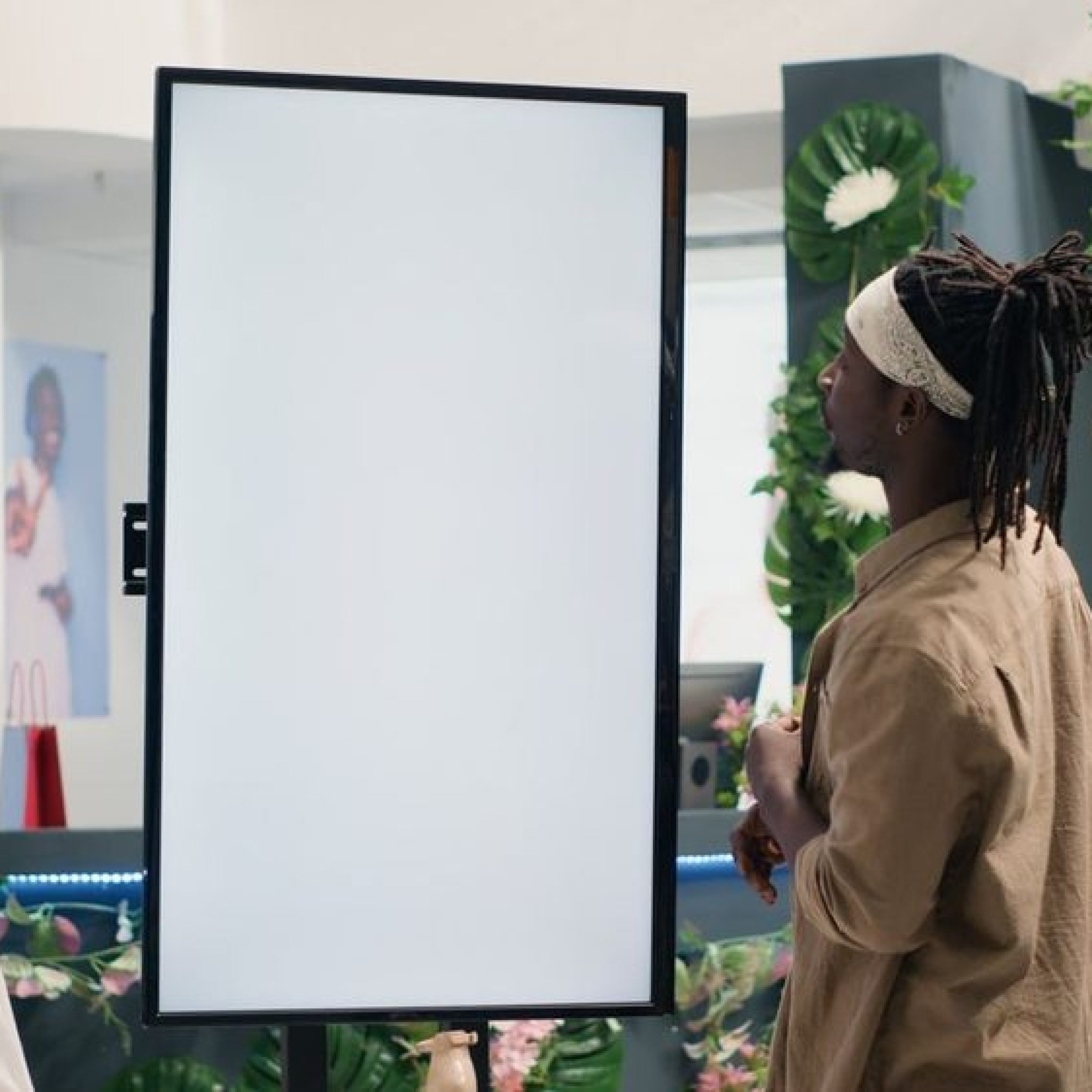
A video wall facing the street works as a 24-hour sign. Rotating content shows new arrivals, seasonal offers or short product demonstrations to people who might never have walked in.
Showrooms and Retail Floors
Inside the store, walls highlight features that are hard to explain on a shelf tag. Automotive, furniture and appliance showrooms use them to show options, finishes and configurations that are not on the floor.
Corporate Lobbies
For B2B companies, the lobby is a sales room. A video wall can introduce the company, feature case studies and welcome visiting clients by name, setting the tone before the first meeting starts.
Restaurants
Menu boards, promotions and event schedules change often. Video walls let restaurants, hotels and venues update them centrally rather than reprinting signs at every location.
LED Video Walls at Trade Shows and Events
In a hall full of printed backdrops, an LED video wall trade show booth stands out. Motion pulls attendees in from the aisle, and a bright, large image gives the sales team something to point to while they talk.
Portable cabinet systems are built to be assembled, taken down and shipped from show to show. Companies that exhibit several times a year often treat the wall as a long-term asset, pairing it with content tailored to each event. Our article on LED video walls at trade shows covers booth design in more detail.
The same equipment can support product launches, sales meetings and customer events at the company’s own facilities between shows.
Content That Turns Viewers Into Buyers
The display draws the eye, but content closes the sale. Strong video wall content follows a few principles:
Lead with motion: short loops and subtle animation hold attention better than static slides.
Keep one message per screen: a viewer passing by reads a headline and an offer, not a paragraph.
Size text for distance: type that reads well on a laptop can disappear on a wall viewed from across a room.
Schedule by audience: content can change by time of day, day of week or season to match who is in the space.
Brand consistency matters too. Colors, fonts and tone on the wall should match the rest of the company’s marketing so the display reinforces the brand rather than competing with it.
Planning an LED Video Wall Installation
A wall that sells starts with planning that fits the space and the business goals. Our guide to LED video wall installation covers the process in depth; these are the decisions that matter most.
Pixel Pitch and Viewing Distance
Pixel pitch is the distance between LEDs on a panel. A finer pitch looks sharp up close, which suits lobbies and showrooms, while a larger pitch works for walls viewed from farther away and usually costs less.
Structure, Power and Cabling
Video walls are heavy and draw significant power. Mounting structures, electrical circuits, ventilation and network cabling need to be designed together, ideally before walls and ceilings are finished.
Content Control and Support
A content management system lets marketing teams schedule and update the wall from one place. Ongoing support and preventive maintenance keep panels calibrated and running, which protects the investment over years of daily use.
Installing Versus Renting
Many companies first search for an LED video wall rental near me for a single event. Rentals suit one-time needs, while a permanent installation gives businesses that advertise every day full control over placement, content and branding.
LED Video Wall Advertising FAQs
For storefronts, showrooms and other bright spaces, yes, since LED walls have no lamps to replace and can be built to almost any size or shape. Projectors still suit dark rooms with controlled lighting, such as some training spaces. Our comparison of video wall vs projector options explains the tradeoffs.
Renting makes sense for a single trade show or a short promotion. When a wall will run every day in a storefront, showroom or lobby, a permanent installation gives the business a display sized for its space, integrated with its network and supported over the long term. The right choice depends on how often the wall will be used.
Most commercial video walls connect to a content management system on the company’s network. Marketing teams upload images and video, build playlists and schedule them by time or date, then push changes to one wall or many locations at once. Training during handover helps staff manage updates without calling for outside help each time.
Ready to put a video wall to work? Talk to Alliance Telecommunications about multimedia/audiovisual solutions designed to help businesses sell.